Digital Memories: Evaluating a Minimalist Sans Serif for Modern Craft Projects
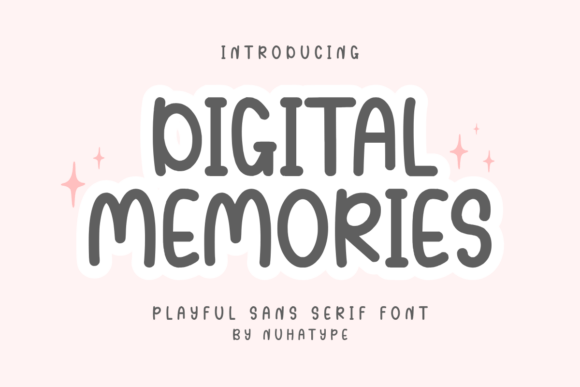
In the vast landscape of digital typography, finding a font that balances legibility with personality is a common challenge for designers and crafters. Among the many options available, Digital Memories has carved out a specific niche. This font is best described as an elegantly minimalist, thin sans serif typeface that mimics the fluidity of natural handwriting. Unlike heavy script fonts or rigid geometric sans serifs, Digital Memories offers a delicate aesthetic that serves as a versatile tool for a variety of creative applications, ranging from interior KDP designs to Cricut creations.
Understanding the Aesthetic and Structure
The primary characteristic of Digital Memories is its understated simplicity. The typeface features thin, uniform strokes that lack the sharp, mechanical edges often found in standard computer fonts. This design choice bridges the gap between digital text and human touch. It does not scream for attention; rather, it whispers, making it an ideal choice for content where the message needs to be clear but the delivery needs to be soft.
For creators working in the print-on-demand space, particularly with interior KDP (Kindle Direct Publishing), the font solves a specific problem: maintaining a high level of readability without looking sterile. Journals, planners, and quote books benefit from a typeface that encourages the user to engage with the text emotionally. Digital Memories achieves this by avoiding the harshness of Arial or Helvetica while steering clear of the illegibility of some cursive scripts.
Comparison with Similar Typography Categories
When evaluating Digital Memories, it is helpful to compare it against other common font categories to understand where it fits in a designer's toolkit.
Thin Sans Serifs vs. Bold Display Fonts
There is a distinct difference in utility between a thin sans serif like Digital Memories and bold, heavy display fonts. Display fonts are designed for impact—think headlines, logos, or branding materials where high visibility is required. In contrast, Digital Memories is designed for prolonged engagement. If you are designing a planner that a user will write in for a year, a bold font can become visually fatiguing. Digital Memories remains unobtrusive, allowing the user's own handwriting or the content of the planner to take center stage.
Handwriting Fonts vs. Natural Sans Serifs
The market is saturated with "handwriting fonts," but many of these suffer from two issues: they are either too messy to read at small sizes, or they are too rigid to feel authentic. Digital Memories positions itself as a natural sans serif. It retains the structure of sans serif typography (even spacing and clean lines) but softens the edges to simulate a hand-drawn quality. This makes it superior to traditional cursive fonts for tasks like creating labels or stickers, where quick readability is essential but a personal touch is desired.
Practical Applications and Use Cases
The versatility of Digital Memories allows it to be applied across various mediums. However, its effectiveness depends on the material and the method of production.
Digital Planning and KDP
For those creating digital planners for apps like GoodNotes or physical planners via KDP, Digital Memories serves as an excellent body text font. Its thin nature means it does not take up excessive visual real estate, leaving ample room for headers, graphics, or user annotations. When compared to standard system fonts often used in KDP interiors, Digital Memories offers a more premium, boutique feel that can increase the perceived value of the product.
Cricut and Vinyl Cutting
For users of cutting machines like Cricut or Silhouette, font choice is dictated by the cutting mechanics. Fonts that are too thin can tear during weeding, while fonts that are too complex can cause the machine to drag. Digital Memories strikes a practical balance. It is clean enough to cut without excessive node points but has enough body to withstand the weeding process for vinyl decals on tumblers, mugs, and tote bags.
- Tumblers and Mugs: The font's thin profile allows for elegant wrapping text that does not overwhelm the curvature of the vessel.
- Tote Bags: When applied to fabric via heat transfer vinyl (HTV), the simplicity of the font ensures that the design does not crack or peel easily at complex intersections.
- Stickers: For planner stickers, the font provides clear labeling without making the sticker look cluttered.
Analyzing the Tradeoffs
No font is perfect for every scenario, and it is important to understand the limitations of a design choice like Digital Memories.
The "Thin" Constraint
The most significant tradeoff with Digital Memories is its weight. Because it is a thin font, it can struggle with visibility in low-contrast environments. For example, using a light grey Digital Memories text on a white background may result in poor legibility. It works best when there is a strong contrast between the text and the background, such as black text on white paper or white vinyl on a dark tumbler.
Scaling and Distance
This font is optimized for close-range reading. It excels in items held in the hand, such as journals, cards, and phone cases. However, if the project involves signage that needs to be read from a distance—such as a yard sale sign or a large wall decal—a heavier, bolder sans serif would be a more effective alternative. Digital Memories lacks the visual "punch" required for long-distance legibility.
Decision Factors: Is Digital Memories Right for You?
When choosing between Digital Memories and other options, consider the following decision factors to ensure the font aligns with your project goals.
- Target Audience: If your audience appreciates a soft, organic, or "boho" aesthetic, Digital Memories is a strong contender. If your audience prefers modern, tech-heavy, or industrial vibes, a geometric sans serif might be more appropriate.
- Production Method: As noted, this font is excellent for digital printing and vinyl cutting. However, for screen printing with very fine mesh screens, extremely thin fonts can sometimes fill in. Always test a small sample before committing to a large production run.
- Content Density: For projects with a lot of text (e.g., a recipe book or a dense journal), the airy nature of Digital Memories helps reduce visual clutter. For projects with very little text (e.g., a single-word monogram), you might want a font with more stylistic flair.
Exploring Alternatives
While Digital Memories is a robust option, exploring alternatives is a natural part of the design process. If you find that Digital Memories is too thin, you might look for "light" or "regular" weight handwriting fonts that offer slightly more stroke thickness. Conversely, if you need something even more delicate for very formal applications, a light serif font might provide the necessary elegance while adhering to more traditional typographic standards.
Another approach is to use Digital Memories as a secondary font. For instance, you could pair a bold, decorative display font for the headline of a tumbler design with Digital Memories for the smaller descriptive text. This creates a visual hierarchy that guides the viewer's eye effectively.
Conclusion
Digital Memories represents a specific segment of the font market: the minimalist, natural sans serif. It is not a universal solution, but for its intended use cases—planners, journals, stickers, and delicate craft projects—it offers a distinct advantage. It provides the warmth of handwriting with the legibility of a sans serif. By understanding its strengths in readability and its limitations regarding visibility and weight, creators can make an informed decision about whether this typeface is the right tool to transform their ordinary crafts into extraordinary artistic expressions.