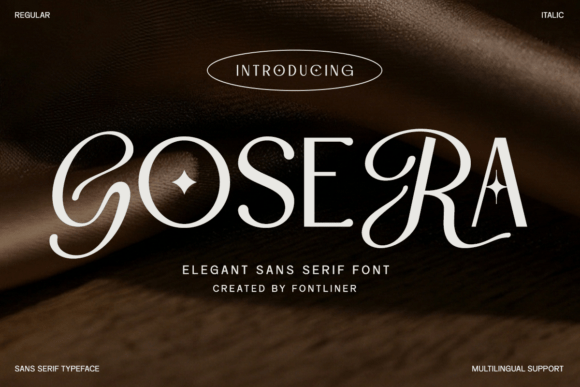
Gosera: Evaluating a Sans Serif for Modern Design
In the landscape of contemporary typography, selecting a typeface that balances aesthetic appeal with functional versatility is a critical decision. Gosera is a sans serif font that has entered this conversation, presenting itself as a blend of modern minimalism and subtle artistic flair. This article provides an objective evaluation of Gosera, exploring its characteristics, ideal applications, and potential limitations to help you determine if it aligns with your design objectives.
Understanding Gosera's Core Design
At its foundation, Gosera is an elegant sans serif. This classification means it forgoes the small projecting features, or serifs, found in typefaces like Times New Roman, resulting in a cleaner, more streamlined appearance. Its design philosophy is rooted in modern minimalism, characterized by clear lines, balanced proportions, and a focus on readability. However, Gosera distinguishes itself through subtle artistic details that prevent it from appearing sterile or overly generic. These nuanced curves and structural choices impart a sense of sophistication and intentionality, setting it apart from purely utilitarian sans serifs.
The typeface family includes an italic style, which is not merely a slanted version of the roman text but a carefully crafted companion. The Gosera italic introduces a graceful, flowing touch that enhances visual dynamics, making it particularly effective for emphasis, quotes, or compositional variety within a layout. This attention to detail across the family suggests a typeface designed for cohesive and polished typographic systems.
Key Characteristics and Potential Benefits
Evaluating Gosera involves looking beyond its visual description to understand the practical benefits it may offer. Its elegant structure is a primary asset, making it a strong candidate for projects where a premium and polished aesthetic is paramount. This characteristic naturally extends its suitability to specific sectors and applications.
- Luxury and Premium Branding: The inherent elegance of Gosera makes it a natural fit for luxury branding, high-end product packaging, and identity design for upscale services. It communicates refinement without excessive ornamentation.
- Fashion and Editorial Design: In contexts where visual appeal is critical, such as fashion lookbooks, magazine headlines, and editorial layouts, Gosera's blend of minimalism and flair can create compelling compositions. The italic style, in particular, adds a layer of dynamism suitable for these industries.
- Modern Identity Systems: For brands seeking a contemporary yet timeless identity, Gosera offers a versatile foundation. It can function effectively in logos, wordmarks, and across various brand touchpoints, from digital interfaces to printed collateral.
- Clear Hierarchy and Readability: As a well-constructed sans serif, Gosera is likely to perform well in both headline and body text contexts, allowing designers to create clear typographic hierarchies within a single typeface family, simplifying the design system.
Practical Considerations and Potential Tradeoffs
No typeface is universally perfect for every project. A balanced evaluation of Gosera requires considering situations where its strengths might not align with specific project needs, or where alternative approaches could be more effective.
- Context is Crucial: While Gosera's elegance is a strength, it might feel out of place in contexts demanding a more rugged, technical, or overtly playful aesthetic. For example, a children's brand or an industrial manual might call for a typeface with a different personality.
- Comparing to Alternatives: Designers often compare similar fonts. When evaluating Gosera, consider how it stacks up against other elegant sans serifs. Does it offer sufficient weight variations for your needs? Is its x-height, character set, and open-type features robust enough for complex projects? Testing it alongside alternatives like Montserrat, Raleway, or more premium options like Avenir Next can clarify its relative value.
- Licensing and Technical Factors: As with any font, practical considerations include its licensing model (desktop, web, app), the breadth of its character set (language support, symbols), and its performance in digital environments. These factors are as important as the aesthetic during the selection process.
- Avoiding Overuse: A font with a strong personality, like Gosera, can become dated if overused within a single industry or trend cycle. Consider whether its style has the longevity required for a long-term brand identity versus a shorter-lived campaign.
Situations for Strong Fit vs. Considering Alternatives
Determining whether Gosera is the right choice involves mapping its characteristics to your project's specific goals.
Gosera is Likely a Strong Fit When:
Your project prioritizes a clean, sophisticated, and modern aesthetic. You are working within the luxury, fashion, beauty, or premium hospitality sectors. You need a typeface family that provides enough variety for a complete design system while maintaining visual cohesion. The goal is to communicate elegance, clarity, and contemporary style without resorting to decorative or script fonts.
Exploring Alternatives May Be Worthwhile When:
The project requires a typeface with a more neutral, anonymous character to let other design elements take precedence. The application demands extreme legibility at very small sizes on low-resolution screens, where a font optimized specifically for screen reading might be preferable. The brand's voice is intentionally casual, technical, or whimsical, which falls outside Gosera's elegant design spectrum. Budget constraints require a comprehensive open-source alternative, though finding a direct match for Gosera's specific blend of qualities may be challenging.
Conclusion: Aligning Gosera with Your Goals
Gosera presents a compelling option within the elegant sans serif category. Its value lies in its specific blend of modern minimalism and artistic subtlety, making it a potent tool for designers working on branding, editorial, and identity projects that demand a polished and premium feel. The inclusion of a well-designed italic style adds significant versatility.
The decision to use Gosera should be based on a clear assessment of your project's personality and requirements. It is not a one-size-fits-all solution but a specialized instrument. By testing it within your specific mockups, comparing it to relevant alternatives, and considering the long-term context of its application, you can make an informed decision about whether Gosera's elegant structure aligns with your creative vision and communication goals.