Stella: Capturing the Roaring Twenties Spirit in Modern Design
There’s a certain magic to the Art Deco era—a feeling of opulence, geometric precision, and unapologetic glamour. It’s a visual language that speaks of jazz-filled nights, grand architecture, and high-society elegance. For designers, tapping into this timeless aesthetic can be a challenge. How do you evoke that specific Gatsby-esque soul without resorting to cliché? Enter Stella, an opulent display serif that doesn’t just reference the 1920s; it embodies its core visual identity.
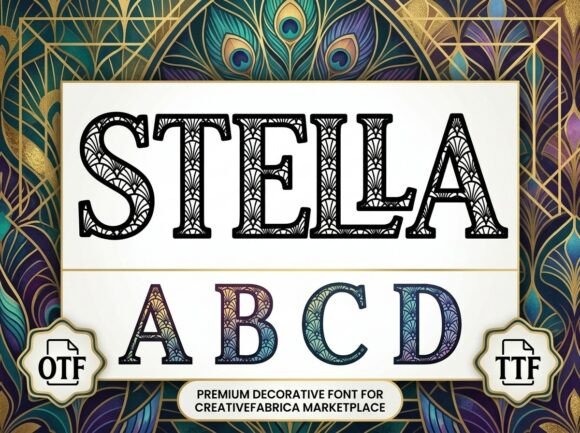
At first glance, Stella is a bold, classic typeface. But look closer, and you’ll discover its secret: each letterform is meticulously filled with a repeating fan-shaped Art Deco motif. This intricate pattern, reminiscent of peacock feathers and the ornate details found on period buildings, creates a rhythmic, geometric texture that is both luxurious and striking. The sharp black outlines ensure legibility and impact, making Stella a premier decorative font for projects that demand attention and a sense of heritage.
Beyond the Invitation: Where Stella Truly Shines
While the immediate thought might be vintage gala invitations, the utility of a font like Stella extends far beyond one-off events. Its strength lies in its ability to instantly establish a brand’s personality and atmosphere. Consider these practical applications where its unique character becomes a powerful asset.
For Independent Luxury Hospitality
Imagine a boutique hotel tucked away in a historic district. Its brand needs to whisper exclusivity and timeless style. Stella can become the cornerstone of its identity. Used for the main logo, it immediately sets a tone of sophisticated elegance. This same typeface can then carry through to room numbers, menu headers, spa brochures, and signage, creating a cohesive and immersive guest experience. The fan motif subtly reinforces the brand’s aesthetic without being overwhelming, turning every touchpoint into a piece of the hotel’s story.
High-End Jazz & Cocktail Establishments
A speakeasy-style jazz club or a craft cocktail bar thrives on atmosphere. The right typography can make a patron feel like they’ve stepped back in time. Stella is perfect for crafting identities that feel both authentic and upscale. Use it for the venue’s name on a website hero image, for the title of a curated cocktail menu, or as impactful headers on social media event promotions. Its decorative nature captures the energy and artistry of the jazz age, appealing directly to an audience seeking a curated, experiential night out.
Modern Brands with a Vintage Soul
The appeal of Art Deco isn’t limited to historical recreation. Contemporary brands in fashion, jewelry, or even artisanal goods often leverage this aesthetic to convey craftsmanship, detail, and premium quality. A sustainable jewelry line, for instance, could use Stella for its wordmark to communicate that its pieces are not just made, but designed with an eye for enduring beauty and intricate detail. The font does the heavy lifting of communicating value before a single product description is read.
Practical Scenarios for the Creative Professional
As a designer, client, or creative, thinking about the use case is more important than just admiring the font. Here’s how different users might approach Stella:
- The Event Planner: You’re designing materials for a corporate gala with a "Great Gatsby" theme. Instead of using a generic serif, Stella on the invitation, program, and digital backdrop provides instant, authentic theming. It becomes a talking point and elevates the perceived value of the event.
- The Social Media Manager: Your luxury brand is launching a new collection. Using Stella for a series of Instagram Story headers or Pinterest pins can stop the scroll. Its high-contrast, textured appearance is optimized for digital screens, making those key announcements feel special and breaking the monotony of standard feed posts.
- The Interior Designer: Creating mood boards for a client’s Art Deco-inspired living room? Including Stella in the presentation typography can help visually communicate the intended aesthetic direction more effectively than a description alone. It’s a tool for selling a vision.
Key Considerations Before You Choose Stella
Every powerful tool requires understanding. Stella is a display typeface, meaning it’s designed for impact at larger sizes, not for body text. Here’s what to keep in mind:
- Context is King: Its ornate details can become muddy and illegible at very small sizes or low resolutions. Always test it at the intended scale. It’s perfect for headlines, logos, and large pull quotes, but pair it with a clean, simple sans-serif or serif for any accompanying body copy.
- Know Your Audience: While the Art Deco revival is popular, ensure the aesthetic aligns with your target demographic. For a young, minimalist tech startup, it might feel incongruous. For a brand targeting adults 25-50 with an appreciation for history, craftsmanship, and luxury, it’s a perfect match.
- Balance is Crucial: Because Stella is so detailed, the rest of your design needs breathing room. Use ample white space, simple color palettes (think black, gold, cream, deep jewel tones), and complementary, understated elements to let the typeface be the star without creating visual chaos.
- Explore Its Versatility: Don’t just use it for a logo. Think about how the fan motif can be echoed in other design elements—a subtle border pattern, a custom icon, or a texture in the background. This creates a sophisticated, layered design system.
Stella is more than a font; it’s a design shortcut to a specific, glamorous mood. It offers a solution for anyone looking to infuse a project with the bold geometry and luxurious feel of the Art Deco movement. By focusing on its practical applications—from building a hotel brand identity to creating scroll-stopping social media content—you can leverage its intricate beauty to tell a compelling visual story that resonates with an audience seeking style, substance, and a touch of timeless elegance.