The Heartfelt Aesthetic: Understanding the Night Camping Typeface
In the vast ecosystem of digital typography, where sans-serifs dominate user interfaces and geometric serifs anchor corporate reports, the handwritten font occupies a unique and vital space. It serves as the bridge between the mechanical precision of digital text and the warmth of human touch. Among the diverse array of script fonts available to designers today, Night Camping stands out as a distinct tool for visual communication. This charming handwritten font is not merely a collection of glyphs; it is a stylistic choice that communicates a specific mood—one of heartfelt perfection, relaxation, and organic authenticity.
To truly understand the value of a typeface like Night Camping, one must look beyond the aesthetic and analyze its structural characteristics, its psychological impact on viewers, and its practical application in various design workflows. This article explores the nuances of this font, offering a comprehensive guide for creators, business owners, and educators on how to leverage its unique properties.
Anatomy of a Handwritten Style
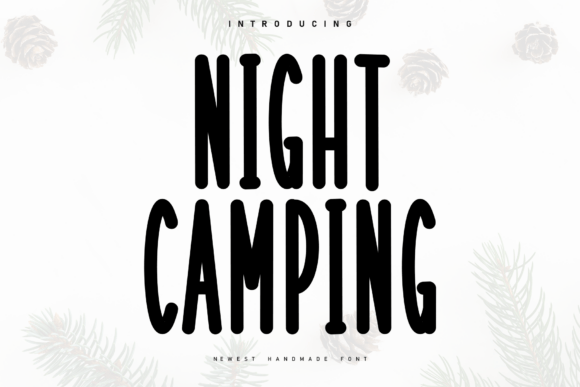
The primary distinction of the Night Camping font lies in its stroke construction. Unlike rigid serif or sans-serif families that rely on strict mathematical curves, this typeface mimics the irregularities of ink on paper. The defining characteristic is its smooth strokes. While many handwritten fonts attempt to mimic rough charcoal or jagged pencil textures, Night Camping opts for a fluidity that suggests the use of a felt-tip pen or a smooth brush.
This fluidity contributes to what designers refer to as "rhythm." The letters flow into one another with an organic cadence. The slightly varying baseline—where the letters do not sit on a perfectly straight line—adds to the realism, preventing the text from looking "digitized." This imperfection is intentional; it creates a relaxed atmosphere that puts the reader at ease. In user experience design, this psychological trigger can be powerful, making content feel more accessible and less authoritative, which is ideal for engagement-driven platforms.
The Role of Organic Lines
The organic lines found in Night Camping are crucial for avoiding the "uncanny valley" of typography—where a font tries too hard to look human but ends up looking artificial. The letter connections are handled with care, ensuring that ligatures (the connections between letters like 'st' or 'ly') look natural rather than forced. This attention to detail is what elevates the font from a novelty to a professional tool. It ensures readability even when the text is used for longer sentences, a common pitfall with other script fonts that prioritize flair over function.
Visual Identity and Branding Strategy
For business owners and brand strategists, typography is the voice of the brand. Choosing Night Camping for a logo or brand identity system sends a clear signal to the target audience. It suggests that the brand values personal connection, creativity, and a laid-back approach. This makes it particularly effective for specific market sectors.
Consider the artisan economy. Small businesses producing handmade goods, organic cosmetics, or boutique apparel often struggle to differentiate themselves from mass-market competitors. By utilizing Night Camping in their branding, these businesses can visually reinforce their "handmade" ethos. The font becomes a shorthand for quality and care. When a customer sees this typeface on a product label, they subconsciously associate the text with the craftsmanship of the product itself.
Sub-Niche Applications
Beyond general retail, the font has practical applications in specialized fields:
- Hospitality and Eco-Tourism: Lodges, campsites, and eco-resorts can use the font to convey a rustic, nature-oriented experience. The name "Night Camping" itself evokes imagery of the outdoors, making it a thematic match for adventure brands.
- Children’s Education: Educators often seek fonts that are friendly and approachable for young readers. The soft edges of Night Camping make it suitable for headers in worksheets or classroom decorations, creating a welcoming learning environment.
- Health and Wellness: Yoga studios and wellness coaches often utilize handwritten fonts to promote a sense of calm and mindfulness. The relaxed nature of the font aligns perfectly with these themes.
Digital Media and Social Engagement
In the realm of social media, capturing attention within the first few seconds is paramount. Static, generic fonts often fail to stop the scroll. However, the charming nature of Night Camping provides that necessary visual friction. It is particularly effective for creating "quote graphics"—overlaying inspirational text on an image.
The font’s ability to evoke a relaxed atmosphere makes it ideal for lifestyle influencers and travel bloggers. It adds a personal, journal-like quality to digital content. However, when using this font for social media graphics, designers must consider the background. Because the strokes are smooth and organic, Night Camping tends to work best against solid, contrasting backgrounds or blurred imagery. Busy backgrounds can clash with the intricate details of the handwritten style, reducing legibility.
Technical Considerations for Implementation
While the aesthetic appeal of Night Camping is high, its implementation requires technical mindfulness. The most common mistake designers make with handwritten fonts is improper kerning (the space between characters). Because the letters are not uniform blocks, automatic kerning in design software may not always align them correctly. Manual adjustment is often required to ensure the connection between letters feels natural.
Hierarchy and Pairing
A core principle of professional design is contrast. Night Camping should rarely be used for body copy (the main paragraphs of text). Its intricate nature makes it difficult to read in small sizes or long blocks. Instead, it should be reserved for display purposes—headlines, sub-headers, or call-to-action buttons.
To create a balanced layout, Night Camping must be paired with a neutral typeface. A clean, geometric sans-serif (such as Montserrat or Lato) or a classic serif (like Garamond) provides the perfect counterbalance. The neutral font handles the heavy lifting of readability for long-form text, while Night Camping provides the personality and emotional hook for the headlines. This pairing strategy ensures that the design remains functional while retaining its unique character.
The Psychology of "Heartfelt Perfection"
The description of Night Camping as possessing heartfelt perfection touches on a broader psychological concept in design: the desire for the human touch in a digital age. As interfaces become more streamlined and standardized, users increasingly crave elements that feel authentic.
This font satisfies that craving. It does not look like it was generated by an algorithm; it looks like it was written by a person. This subtle cue can increase trust. In email marketing, for example, using a handwritten font for a signature or a P.S. note can make the communication feel less like a mass blast and more like a personal letter. This technique leverages the font's inherent warmth to foster a stronger connection between the sender and the receiver.
Considerations for Licensing and File Formats
For professionals integrating Night Camping into their workflow, understanding the technical file formats is essential. The font is typically available in TTF (TrueType Font) and OTF (OpenType Font) formats. For web designers, a WOFF or WOFF2 file is necessary to ensure the font renders correctly across different browsers without slowing down page load times.
When embedding handwritten fonts on websites, it is crucial to test for accessibility. Screen readers may struggle with highly stylized text, and users with visual impairments may find the irregular letterforms difficult to decipher. Therefore, accessibility guidelines suggest using such fonts sparingly and ensuring that the font size is sufficiently large (usually 18px or larger for script fonts) to maintain legibility for all users.
Trend Analysis: Is Handwriting Here to Stay?
Design trends are cyclical. We have seen the dominance of brutalism, the resurgence of art deco, and the current wave of 3D typography. However, the handwritten style remains a perennial favorite. It transcends trends because it is rooted in fundamental human communication. As long as humans write by hand, fonts that emulate that action will retain their relevance.
Night Camping fits into the current "warmth" trend, where designers are moving away from cold, corporate aesthetics in favor of inviting, tactile visuals. It represents a shift towards designs that prioritize emotional resonance over pure geometric perfection. For designers looking to future-proof their work, mastering the use of fonts like Night Camping is a valuable skill that bridges the gap between technical execution and emotional storytelling.
Conclusion on Craftsmanship
Ultimately, the success of any design project lies in the details. Night Camping offers a specific toolset for those details. It is a font that requires context to shine—used correctly, it elevates a design from merely informative to evocative. By understanding its smooth strokes, its ideal use cases in branding and digital media, and the technical requirements for legibility, designers and creators can harness the full potential of this charming typeface. It serves as a reminder that in a world of pixels and vectors, the spirit of the handwritten word still holds immense power.