Understanding Bruno: The Avant-Garde Typeface for Bold Creators
In the vast ocean of digital typography, finding a font that truly stands out can be a challenge. Many typefaces aim for neutrality, blending seamlessly into body text or corporate reports. But what about the projects that demand to be seen? This is where Bruno enters the conversation. It is not just a set of letters; it is an engineered decorative display font designed to be the undeniable focal point of any composition.
For designers, artists, and brand strategists, the choice of typography defines the entire mood of a project. Bruno is characterized by a commanding visual personality and unique artistic flourishes. It carries a strong, artistic soul, yet it maintains a high-end, polished finish. This duality makes it incredibly versatile for specific applications. It is as suitable for luxury packaging as it is for experimental editorial layouts, provided the goal is to make an impact.
When to Deploy Bruno in Real-World Projects
Knowing when to use a display font is just as important as the font itself. Bruno is an all-caps typeface, which means it is engineered for high-impact moments rather than long-form reading. Its primary strength lies in grabbing attention immediately.
Luxury Branding and Conceptual Packaging
Imagine walking down the aisle of a high-end cosmetics store or a boutique liquor shop. The products that catch your eye usually have one thing in common: distinct typography. Bruno excels in this environment. Its polished finish gives it a premium feel that resonates with luxury goods. If you are designing a label for a niche perfume, a craft spirit, or a limited-edition sneaker, Bruno provides the weight and elegance required to suggest quality. It moves beyond simple labeling to become part of the product's identity.
Editorial and Poster Design
Magazine covers, movie posters, and event flyers rely heavily on the hierarchy of text. The headline needs to pull the reader in from a distance. Because Bruno is designed with intricate craftsmanship on every individual letter, it acts almost like a standalone work of art. Using it for the title of a magazine feature on modern architecture or an art exhibition poster immediately sets a sophisticated, avant-garde tone. It works particularly well in editorial layouts where the typography is meant to be a graphic element in its own right, not just a carrier of information.
Social Media and Digital Presence
In the fast-scrolling environment of Instagram or TikTok, you have milliseconds to capture attention. Standard sans-serifs often get lost in the noise. Bruno, however, offers a unique visual texture that can stop a thumb mid-scroll. It is ideal for creating bold statement graphics, promotional announcements, or stylized quote cards. For influencers or brands looking to cultivate an aesthetic that feels artistic and intentional, this typeface serves as a powerful tool.
The Philosophy Behind All-Caps Design
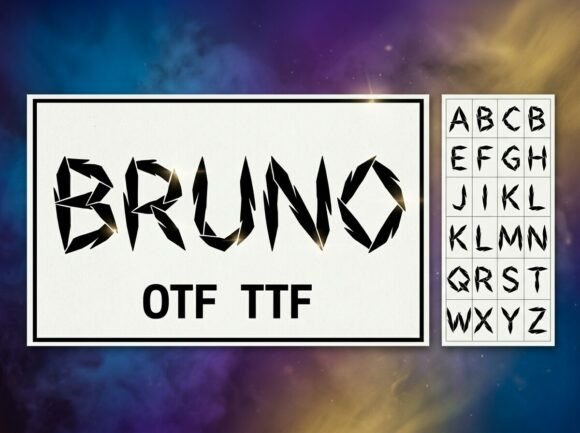
A defining characteristic of Bruno is that it is an all-caps uppercase-only display typeface. This is a deliberate design choice, not a limitation. By omitting lowercase characters, the designer has focused entirely on the intricate craftsmanship of every individual letter.
In typography, all-caps fonts often convey authority, stability, and importance. They command respect. When you use Bruno, you are adopting a voice that is confident and assertive. This makes it perfect for logos and branding where the name needs to feel established and authoritative. However, this also brings a practical consideration: readability. Because the letterforms are artistic and decorative, Bruno is best used for short bursts of text—headlines, single words, or logos. Using it for a paragraph of body copy would likely overwhelm the viewer and reduce legibility.
Practical Considerations for Implementation
Before integrating Bruno into your workflow, it is helpful to understand the technical assets provided. The package includes both OTF (OpenType) and TTF (TrueType) formats.
- OTF OpenType Font: This is the industry standard for professional designers. If you are using software like Adobe Illustrator, Photoshop, or InDesign, the OTF file offers advanced layout features. It provides the highest quality rendering and is the preferred choice for print-ready artwork.
- TTF TrueType Font: This format ensures universal compatibility. If you are working across different operating systems or using software that requires broader support, the TTF file is reliable. It is also useful for digital applications where you need to ensure the font renders correctly on various devices.
One common consideration when working with decorative all-caps fonts is spacing. Because Bruno features unique artistic flourishes, the kerning (space between letters) might need manual adjustment depending on the specific letters you pair together. For example, a 'B' and an 'R' might sit differently than an 'A' and a 'V'. Taking the time to fine-tune the tracking and kerning will ensure that the high-end finish of the font is preserved in your final design.
Who Benefits Most from Bruno?
The utility of Bruno spans across various creative professions, but it is particularly valuable for those who view design as an expressive art form.
Logo Designers and Brand Strategists
Creating a visual identity for a new brand requires a typeface that can carry the weight of the company's values. If a brand wants to position itself as bold, creative, and unapologetically different, Bruno is an excellent candidate. It helps create logos that feel custom-made and memorable.
Web Designers Seeking Visual Hierarchy
Modern web design often relies on large, bold typography to break up sections and guide the user's eye. Using Bruno for hero section headers on a website can instantly establish a mood of sophistication and creativity. It pairs well with minimalist layouts where the typography does the heavy lifting.
Event Planners and Stationery Designers
For high-impact events like gallery openings, fashion shows, or avant-garde weddings, the invitation sets the tone. Bruno offers a distinct alternative to traditional calligraphy or standard serif fonts. It brings a modern, artistic edge to stationery that feels fresh and current.
Ultimately, Bruno is a tool for expression. It is for the creator who refuses to blend in and requires a typeface that matches their ambition. Whether applied to a billboard or a business card, it ensures that the message is not just read, but felt. By understanding its strengths as a display font and respecting its all-caps structure, designers can leverage Bruno to create work that is visually striking and emotionally resonant.