Banks: Mastering the All-Caps Display Typeface for Bold Branding
In the world of digital design and typography, there is a constant tension between readability and personality. While body text fonts like Helvetica or Georgia do the heavy lifting for long-form reading, display fonts are the sprinters of the type world—they are built for impact, not distance. If you are a creator, entrepreneur, or designer looking to inject a distinct visual voice into your work, understanding how to leverage a specific aesthetic is crucial. Enter Banks, a stunning decorative display font designed to command attention and transform standard layouts into artistic statements.
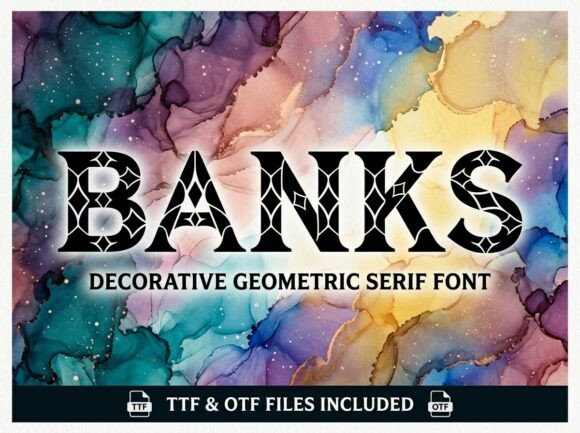
Banks is not just a collection of letters; it is a visual tool engineered to break away from the ordinary. It features unique artistic elements that give it a strong personality, making it the ideal choice for projects where the headline needs to do more than just introduce a topic—it needs to set the mood. Whether you are designing a logo, creating packaging for a new product, or laying out a magazine cover, this typeface offers a professional finish that bridges the gap between artistic flair and commercial polish.
The Power of the All-Caps Aesthetic
Before diving into specific applications, it is vital to understand the technical nature of this typeface. Banks is an ALL-CAPS uppercase-only display typeface. This is a deliberate design choice, not a limitation. In typography, all-caps fonts are specifically engineered for high-impact scenarios. They are designed to function as a cohesive block of visual information where every letter is treated as a work of art.
Using an uppercase-only font requires a shift in design thinking. You cannot simply type out a paragraph and expect it to be legible. Instead, you must treat the text as a graphic element. This makes Banks perfect for:
- Bold Headlines: Capturing the user's eye immediately upon landing on a page.
- Decorative Initials: Creating elaborate drop caps that anchor a page of editorial design.
- Logo Design: Establishing a brand identity that feels authoritative and stylish.
Because it does not include lowercase letters, you are encouraged to use this font for short, powerful bursts of text. Think of it as the architectural framework of your design—the heavy beams and girders that hold the structure, rather than the drywall and paint that cover it.
Practical Applications for Modern Creators
The versatility of Banks allows it to adapt to various professional contexts. For the entrepreneur or small business owner, this font offers an immediate upgrade to brand perception. Here is how different users can apply it effectively:
1. Branding and Logo Systems
A logo is often the first interaction a customer has with a business. Using Banks for a wordmark (a logo made purely of text) creates an instant impression of confidence. The unique artistic elements of the font ensure that even a simple text logo looks custom-designed. For example, a boutique coffee roaster or a high-end streetwear brand could use this font to convey a sense of "cool" and exclusivity without needing complex imagery.
2. Creative Packaging Design
On a crowded shelf, packaging must scream to be heard. Banks is versatile enough for creative packaging because it maintains a polished finish even at large scales. Imagine a matte black box with the product name rendered in Banks using a spot UV varnish. The strong visual personality of the font turns the packaging into a status symbol. It works exceptionally well for products targeting the 20–50 demographic, who appreciate design maturity and aesthetic intention.
3. Digital Content and Social Media
For bloggers and content creators, thumbnails and cover images are the gateway to engagement. A common mistake is using a standard sans-serif font for a YouTube thumbnail or an Instagram carousel title. By swapping in Banks, you instantly elevate the production value. The font’s "high-impact" nature ensures that text remains readable even on small mobile screens, provided it is used for short titles rather than descriptions.
Technical Workflow: Integrating Banks into Your Stack
Understanding the technical files you receive is just as important as the design itself. When you acquire Banks, you gain access to industry-standard file types that ensure compatibility across your entire workflow.
- The OTF (OpenType Font) File: This is the professional standard. If you are using advanced design software like Adobe Illustrator, InDesign, or Affinity Designer, the OTF file is your go-to. It allows for smoother rendering and advanced typographic features.
- The TTF (TrueType Font) File: This file provides universal compatibility. It ensures that your text renders correctly across all devices, operating systems, and older software versions. This is particularly useful if you are embedding the font into a web project or using it in software that is less optimized for modern font formats.
By having both formats, you ensure that your design vision is never compromised by technical limitations. You can move seamlessly from a high-resolution print layout to a web-based header without losing the integrity of the typeface.
Design Strategies for Clarity and Impact
While Banks is visually striking, using a decorative display font requires restraint to maintain effectiveness. Here are some grounded recommendations for keeping your designs organized and audience-friendly:
Pairing with Neutral Fonts
Because Banks has such a strong personality, it should rarely be paired with other decorative fonts. To avoid visual clutter, combine it with a clean, neutral sans-serif or a classic serif font for body text. If Banks is the voice shouting the headline, your body font should be the calm voice explaining the details. This contrast creates a hierarchy that guides the viewer’s eye naturally.
Kerning and Spacing
Display fonts often benefit from adjusted kerning (the space between letters). Because Banks is designed for artistic impact, you may find that tightening or loosening the letter spacing slightly can create a more cohesive visual block. When used for logos, always manually adjust the kerning to ensure optical balance. This attention to detail is what separates amateur designs from professional typography.
Color and Contrast
To maximize the "stunning" quality of the font, consider your color palette. High-contrast combinations—such as white text on a dark charcoal background, or a metallic gold on deep navy—allow the unique shapes of the letters to pop. Since the font is designed to be the center of attention, give it room to breathe. Avoid placing it over busy photographs unless you apply a solid color overlay or a blur effect to the background first.
Adapting to Different Audiences and Contexts
The utility of Banks extends beyond traditional graphic design. Educators and freelancers can also leverage this typeface to enhance their communication materials.
- For Educators: Creating engaging presentation slides or workshop headers. An all-caps font grabs attention during a lecture or webinar, helping to emphasize key takeaways.
- For Freelancers: Pitch decks and proposals. Using a bold font like Banks for the title slide of a client proposal can subconsciously signal confidence and creativity, setting the tone for the project.
- For Publishers: Book covers, especially in genres like thriller, sci-fi, or contemporary non-fiction, benefit from the authoritative look of uppercase display typography.
Ultimately, Banks