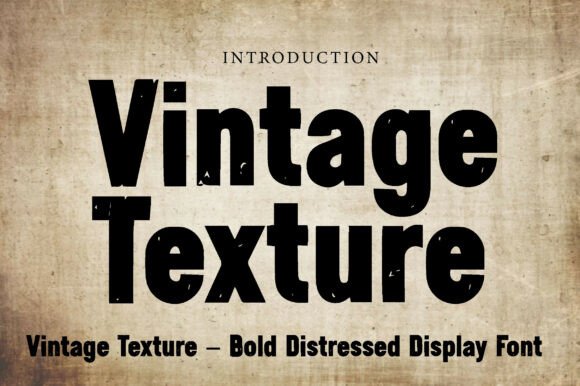
Unearthing the Grit: Why Vintage Texture is Your New Secret Weapon
Let's be honest. In a world saturated with sleek, minimalist sans serif fonts, standing out feels like shouting into the void. We've all seen the same geometric typefaces on a hundred different startup logos and tech blogs. But what if your brand, your project, or your next creative endeavor demanded something with more soul? Something with a history etched right into its letterforms? This is where a premium font like Vintage Texture stops being a mere tool and becomes a storyteller.
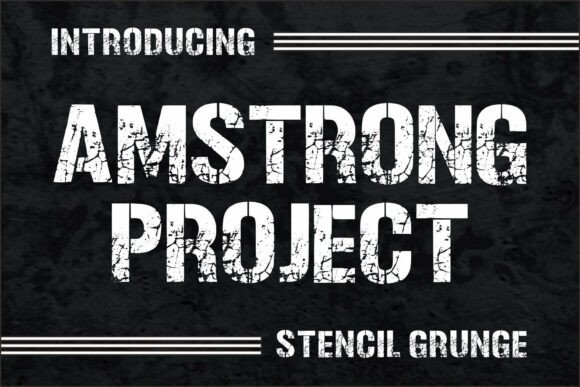
Forget the polished perfection of modern design for a moment. Vintage Texture is a display font that doesn't just sit on the page; it inhabits it. Imagine the bold, confident lettering of old industrial signage, the kind you'd find on a weathered workshop door or a classic product crate. Now, imagine that lettering has lived a life—it's been exposed to the elements, carrying the subtle nicks, uneven ink coverage, and textured edges of real-world use. That's the essence of this typeface. It’s a serif font at its core, but its character is defined by its deliberate imperfections. The distress isn't a flaw; it's its primary feature, giving every headline an immediate sense of authenticity and rugged charm.
Where Does This Rustic Powerhouse Truly Shine?
The strength of a creative font like this lies in its specificity. You wouldn't set a 500-page novel in it, but you'd absolutely use it for the cover. Think about projects where first impressions are visceral and need to convey a specific mood instantly.
- Branding with Backbone: For a craft brewery, a tattoo parlor, a rugged outdoor apparel line, or a specialty coffee roaster, Vintage Texture forms the bedrock of a powerful brand identity. It tells customers you value tradition, craftsmanship, and substance over fleeting trends. Use it for your logo design to create an emblem that feels established from day one.
- Packaging That Pops: On a shelf crowded with clean, contemporary labels, a product wrapped in the gritty charisma of this display font is impossible to ignore. It works exceptionally well for packaging design for artisanal goods, hot sauces, whiskeys, or handmade soaps, instantly communicating a handcrafted, premium quality.
- Print with Presence: From concert posters and event flyers to magazine mastheads and book titles, Vintage Texture commands attention. Its bold weight and textured surface ensure your message isn't just read—it's felt. It’s a fantastic tool for editorial design where a feature story needs a headline with real weight.
- Digital with Depth: Don't relegate it to print. This creative font injects personality into digital spaces. Use it for hero text on a website landing page, for captivating social media graphics that stop the scroll, or for YouTube thumbnails that promise gritty, authentic content. It adds a layer of tactile interest that flat digital design often lacks.
Making Vintage Texture Work For You: A Practical Guide
Adopting a character-driven font requires a bit of strategy. Its power is in its personality, which means you need to deploy it thoughtfully to get the best results for your project's readability and overall impact.
Mastering Font Pairing and Visual Hierarchy
The golden rule with a dominant display font like Vintage Texture is to let it be the star. Pair it with a clean, neutral companion. A simple sans serif font or a classic serif font for body text creates a beautiful contrast, ensuring your paragraphs remain easy to read while your headlines do the heavy lifting. This contrast is fundamental to good visual hierarchy. Let the vintage font draw the eye to the most important information—a headline, a product name, a call to action—while supporting text remains unobtrusive. This balance is key to professional web design and print layout.
Evaluating Fit and Licensing
Before you commit, ask yourself: Does my project's personality align with a rustic, distressed aesthetic? A law firm's annual report? Probably not. A new line of organic jerky? Perfect. Always test the font with your actual content. See how the specific letters in your brand name or headline look. Check the included styles—does it have the punctuation and numerals you need? Finally, for any commercial project, from client work to your own product line, ensure you have the correct commercial font license. Reputable foundries provide clear licensing terms, which is a non-negotiable part of using professional design assets.
Ultimately, Vintage Texture