Mango: The Typeface Connecting Tech, Stars, and Vision
Where Digital Circuits Meet Constellations
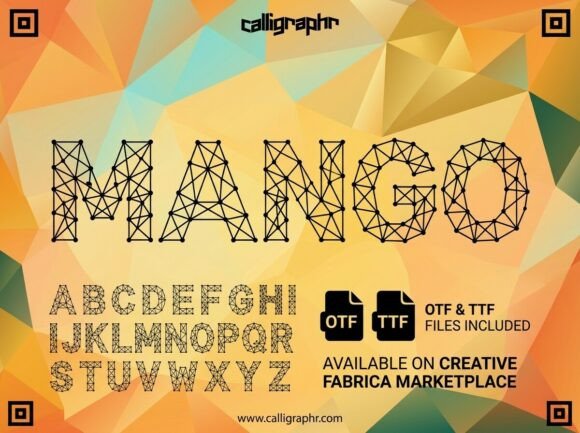
In a world saturated with standard sans-serifs and predictable serifs, finding a typeface with a distinct, ownable voice is a powerful creative act. Enter Mango, a visionary display typeface that does more than just spell words—it builds a visual language of connection. Its core concept is a beautiful paradox: it’s both technical and cosmic. Each letterform is constructed from a rhythmic network of nodes and fine connecting lines, instantly evoking the intricate pathways of data circuits on a motherboard or the elegant geometry of star maps. This isn't just a font; it's a design system in itself, offering a fresh perspective for projects that live at the intersection of innovation, technology, and big-picture thinking.
Anatomy of a Visionary Font
Understanding Mango’s construction is key to using it effectively. Its monolinear quality means the strokes maintain a consistent width, contributing to a clean, technical aesthetic. The real magic, however, lies in its geometric construction and the deliberate visibility of its nodes—the points where strokes begin, end, or change direction. In most fonts, these are hidden; in Mango, they are celebrated as integral design elements, connected by hairline strokes that create a sense of network and flow. This results in an airy, high-contrast feel that is surprisingly legible at display sizes while feeling inherently modern and engineered.
Practical Applications for Forward-Thinking Brands
Mango’s unique character makes it a premier choice for specific branding and communication goals. Its soul is in the details of connectivity, making it ideal for audiences who value ideas, networks, and the future.
- Independent Software & SaaS Startups: A logo set in Mango immediately communicates a foundation built on code, connectivity, and scalable systems. It says, "We build the architecture that connects things." Use it for your wordmark, app icon lockups, and key feature headlines on your landing page.
- Science Communication & EdTech: For titles of documentaries, podcast covers, or educational platform headers, Mango bridges the gap between data and wonder. It can visualize concepts like neural networks, blockchain, or quantum computing with inherent clarity and style, making complex topics feel accessible and exciting.
- Innovation & Connectivity Social Media Headers: A Twitter or LinkedIn banner featuring a phrase like "Building the Network" or "The Future is Connected" in Mango instantly sets a professional, forward-thinking tone. Its intricate details hold up surprisingly well in optimized digital formats, adding depth without clutter.
Creative Interpretations and Stylistic Variations
While Mango has a strong inherent voice, skilled designers can adapt its use to fit different moods and contexts. Don't just use it—interpret it.
- The Minimalist Tech Approach: Use Mango in a single, clean color against a dark or stark white background. Pair it with a simple, highly readable sans-serif for body text. This emphasizes its architectural purity and is perfect for a fintech company or a data analytics firm. The focus is on precision and clarity.
- The Cosmic Narrative Style: Lean into the constellation analogy. Use Mango on a dark background with subtle gradient glows or particle effects emanating from the nodes. This works brilliantly for a space tourism blog, an astronomy app, or a sci-fi book title. Here, the font tells a story of exploration and discovery.
- The Hybrid Editorial Look: For a magazine feature on "The Future of AI" or a keynote presentation, use Mango for a powerful pull quote or section title. Its technical feel grounds the topic, while its unique form adds visual interest and breaks the monotony of standard editorial typography.
Adapting Mango for Your Audience and Platform
The key to successful application is context. A typeface this distinctive can overwhelm if not used thoughtfully.
For Entrepreneurs & Small Business Owners: You don’t need to be a tech giant to use Mango. A boutique data consultancy, a coding bootcamp, or a renewable energy startup can use it to signal a modern, innovative approach. Use it sparingly for your primary logo or a single key headline on your website to establish a unique brand signature without alienating clients who prefer more traditional aesthetics.
For Marketers & Content Creators: Mango is a display typeface. Its strength is in headlines, titles, and logos—not in body copy. For a YouTube video thumbnail, use one impactful word in Mango (e.g., "CONNECTED" or "CODE") and keep other text in a complementary, simpler font. This creates a clear visual hierarchy and ensures your message is both striking and legible.
For Designers & Freelancers: When presenting Mango to a client, articulate the "why." Explain how the font’s visual language of nodes and connections aligns with their brand values of integration, innovation, or scalability. Show mockups in realistic contexts: a website hero section, a mobile app splash screen, a conference badge. This transforms a font choice from a subjective preference into a strategic brand decision.
Keeping Your Design Clear and Effective
With a typeface as evocative as Mango, the principle of "less is more" is your best guide.
- Balance with Simplicity: Always pair Mango with a calm, neutral body typeface (think fonts like Inter, Open Sans, or IBM Plex Sans). This prevents visual competition and ensures your overall design remains organized and readable.
- Respect the Details: Avoid using Mango at very small sizes where its intricate connecting lines will collapse into a muddy blur. Its ideal domain is large-scale display use where its architectural details can be fully appreciated.
- Color with Purpose: A single, high-contrast color often works best. White on black, or a bright accent on a dark navy, allows the letterforms to shine. Overly busy backgrounds or multiple colors can fight with the font's own internal complexity.
- Consider the Message: Does your project truly benefit from a language of connection and networks? If you're selling artisanal pottery or vintage furniture, Mango might be a stylistic mismatch. Authenticity in typography means the form supports the message.
A Tool for the Modern Visual Storyteller
Ultimately, Mango is more than a set of glyphs. It’s a conceptual tool for designers and creators who want to visualize the invisible threads that define our era: data flows, social networks, and the vast, interconnected cosmos. It offers a practical way to embed a narrative of innovation directly into your brand's typography. By understanding its construction, respecting its strengths, and applying it with clear intent, you can harness its visionary spirit to create work that doesn't just look current, but feels genuinely forward-thinking. It’s an invitation to connect the dots in your own creative work.