Stay Barbie: A Deep Dive into This Retro-Groovy Display Font
Understanding the Core Appeal of Stay Barbie
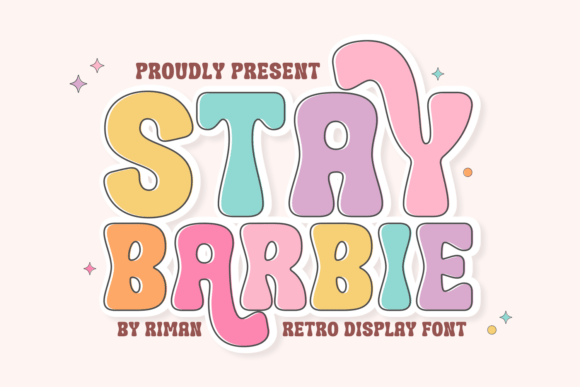
In the vast landscape of digital typography, selecting a font that captures a specific historical mood while remaining functional for modern design can be challenging. Stay Barbie positions itself as a distinct option within the "groovy" and "retro" typography categories. It is not merely a simple serif or sans-serif; it is a display typeface designed to evoke the vibrant, whimsical atmosphere of the 1970s. The design philosophy behind Stay Barbie focuses on generously stout curves and sleek corners, creating a visual weight that commands attention without feeling overly aggressive.
Unlike minimalist modern fonts that prioritize neutrality, Stay Barbie embraces personality. The inclusion of spirited swashes and stylistic alternates allows designers to customize the letterforms, adding a layer of playful sophistication. This font is engineered to be a "voice" in a design, speaking directly to themes of nostalgia, fun, and bold expression. For designers evaluating options, understanding this core identity is the first step in determining if Stay Barbie aligns with their project's narrative.
Visual Characteristics and Distinctive Features
The primary differentiator for Stay Barbie lies in its specific blend of retro aesthetics and digital versatility. The font family typically includes:
- Uppercase and Lowercase Sets: While many retro display fonts rely solely on uppercase for impact, Stay Barbie provides both, offering more flexibility for varied typographic hierarchies.
- Numerals and Punctuation: A complete set ensures that the font can be used for full sentences and data, not just headlines.
- Stylistic Alternates: This is a critical feature for professional use. Alternates allow users to swap out specific letterforms to avoid repetition or to better fit the flow of a word, which is essential in script and display typography.
The "stout" nature of the characters suggests a high x-height and wide set width, which generally translates to excellent readability at larger sizes. This makes Stay Barbie particularly suited for applications where the text is the focal point, such as on merchandise or in hero sections of a website.
Practical Applications: Where Stay Barbie Shines
When evaluating a font like Stay Barbie, it is helpful to map its strengths against specific project requirements. Based on its design attributes, there are several areas where it tends to perform exceptionally well.
Merchandise and Apparel
The bold, jubilant vibe of Stay Barbie makes it a strong candidate for t-shirt designs and quirky stickers. In the print-on-demand industry, fonts need to be legible from a distance and convey a mood instantly. The retro-tinted aura of this font aligns well with current trends in vintage-inspired apparel, offering a nostalgic look that appeals to a broad demographic.
Poster and Event Design
For dramatic posters—whether for music festivals, themed parties, or artistic prints—Stay Barbie provides the necessary visual impact. Its "funky groove" complements themes related to the 70s, disco, or psychedelic art. The font's curves and swashes can fill negative space effectively, reducing the need for excessive additional graphic elements.
Branding and Social Media
In the realm of dynamic branding, particularly for lifestyle brands, bakeries, or creative studios, Stay Barbie can inject personality into a logo or social media graphics. It works well for creating captivating quotes on platforms like Instagram or Pinterest, where visual stop-power is essential for engagement.
Comparing Stay Barbie to Other Typographic Styles
To make an informed decision, it is useful to compare the "Stay Barbie" style against other common font categories. This comparison helps clarify when this specific aesthetic is the right tool for the job.
Stay Barbie vs. Standard Sans-Serifs
Standard sans-serifs (like Helvetica or Open Sans) are designed for neutrality and long-form reading. Stay Barbie, by contrast, is a display font. It is not intended for body text or legal disclaimers. If a project requires high legibility for paragraphs of information, a standard sans-serif is the appropriate choice. However, if the goal is to create a header that feels warm and inviting, Stay Barbie offers a distinct advantage in emotional resonance.
Stay Barbie vs. Traditional Serifs
Traditional serifs (like Times New Roman) convey authority, tradition, and formality. While Stay Barbie possesses a "vintage sophistication," it is a retro-vintage, not a classical-vintage. It evokes the 1970s rather than the 1920s or 1800s. Designers looking for a "heritage" or "established" feel might find Stay Barbie too playful. Conversely, for projects aiming for a "heritage of fun" or a "classic retro aesthetic," it is superior to stiff serifs.
Stay Barbie vs. Handwritten Scripts
Many designers looking for whimsy turn to handwritten scripts. While scripts offer a personal touch, they can often be difficult to read in all-caps or at varying sizes. Stay Barbie provides a structured whimsy. It maintains the legibility of a constructed typeface while capturing the spirit of hand-lettering through its swashes and curves.
Evaluating Tradeoffs and Limitations
No single font is a universal solution, and a balanced assessment of Stay Barbie requires acknowledging its limitations.
- Scalability Issues: Because of its stout curves and decorative nature, Stay Barbie may lose clarity if used at very small sizes (e.g., 10px or 12px on mobile screens). It is best reserved for medium-to-large display sizes.
- Thematic Mismatch: The 70s aesthetic is specific. Using Stay Barbie for a corporate finance report, a medical application, or a serious legal document would likely create a dissonance with the content. It is a stylistic font, not a neutral utility font.
- Overuse Risk: Display fonts with high personality can fatigue the viewer if overused. A common tradeoff with fonts like Stay Barbie is the need to pair them carefully with a very neutral secondary font to prevent the design from becoming visually chaotic.
Decision Factors: Is Stay Barbie the Right Choice?
When deciding whether to integrate Stay Barbie into your workflow, consider the following decision factors:
- Target Audience: Does your audience respond to nostalgia? Is the demographic likely to appreciate retro trends? If your audience skews toward a younger, trend-aware demographic or appreciates vintage culture, Stay Barbie is a strong contender.
- Project Tone: Is the tone of the project "serious" or "playful"? If the goal is to entertain, delight, or inspire, the bold jubilance of Stay Barbie is an asset. If the goal is to inform or instruct formally, it is a liability.
- Technical Requirements: Do you need a font that works well in long paragraphs? If so, you will need a different option. If you need a font for headlines, logos, and short bursts of text, Stay Barbie is designed for this purpose.
Conclusion on the Stay Barbie Aesthetic
Ultimately, Stay Barbie is a specialized tool for a specific creative vision. It excels in environments where the goal is to create a vibrant, whimsical, and retro-tinted aura. For designers working on t-shirt designs, stickers, posters, or branding that requires a nod to the funky groove of the 70s, it offers a cohesive set of features, including alternates and full character sets, that support professional-grade work.
However, for projects requiring strict neutrality, high-density text readability, or a modernist aesthetic, exploring other options would be more prudent. By weighing the visual strengths of Stay Barbie against the practical needs of your specific project, you can determine if its vintage sophistication is the missing piece in your design toolkit.